Helena Lipstadt
Poet
Biography
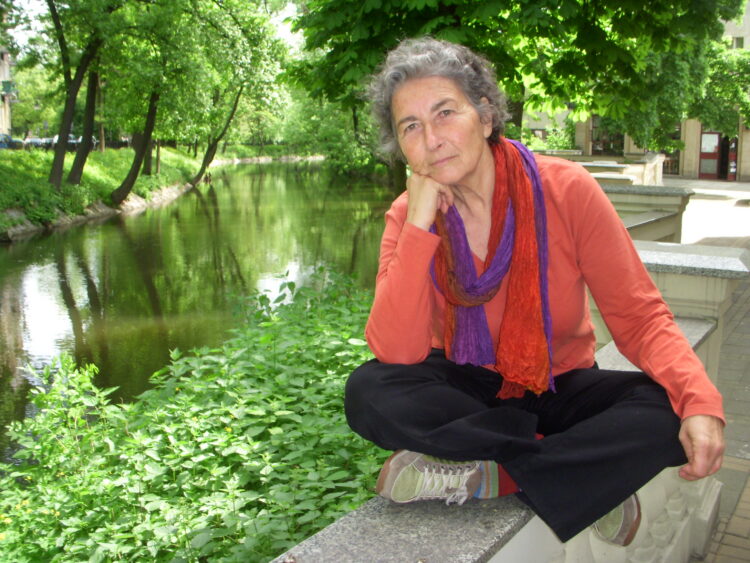
Helena Lipstadt is the author of two chapbooks, Leave Me Signs and If My Heart Were a Desert. Her poems have been featured in The Midwest Quarterly, Sinister Wisdom, About Place Journal, and elsewhere. Anthologies with her prose include The Challenge of Shalom and A Dangerous New World: Maine Voices on the Climate Crises.
Her work has been generously supported by residencies at WUJS Arts Project, Arad, Israel and The Borderland Foundation, Sejny, Poland.
She studied with poets Melanie Kaye Kantrowitz, Irena Klepfisz, and Laurel Ann Bogen. Lipstadt accepted Bedouin hospitality in a tent on the shoulder of Mount Sinai, sailed up the Nile River in a felucca, and in Poland, helped re-create a 17th century wooden synagogue. She designed and hand built her home in Maine.
What is the relationship between Judaism and/or Jewish culture and your poetry?
I immigrated to the United States as a child from Berlin, Germany where I was born in Schlachtensee Displaced Persons Camp. My parents, Bala Parzeczewska Lipstadt and David Lipstadt, survived the Holocaust hidden in the cellar of a Polish woman, the mysterious Pani Mochska, in Warsaw, Poland.
I grew up in a community of Jewish Holocaust survivors in central Connecticut where conversations were polyglot and often hushed. Being Jewish is/was knit, woven and dyed into me. My work reflects my background both overtly and covertly, and is dedicated to seeing the past anew and the future with a generous heart.
Published Works
Our Dark and Radiant Land (Finishing Line Press, 2023)
If My Heart Were a Desert (Thousand Stars Press, 2003)
Leave Me Signs (Thousand Stars Press, 1998)
Links to Sample Works
Trivia Voices of Feminism, “Snake I Come”
About Place Journal, “documents of flight”
Porter House Review, “A Quarrel With the Village of My Birth”